Regenerating the Bay: Nature-Based Solutions in Santa Teresa
Marine ecosystems, the largest on Earth, play a crucial role in regenerative processes. By providing “services to people” (known as Ecosystem Services), including regulating, provisioning, supporting and cultural services, they offer natural solutions to climate change. These natural capacities are key to designing strategies that regenerate heavily impacted environments. Nature-Based Solutions (NBS) are widely recognised tools that support the vitality and health of economic systems by creating and sustaining regenerative pathways. Restoring ecosystems, habitats and species, adopting circular approaches, using ocean resources sustainably and developing green coastal infrastructure all contribute to these pathways. Together, they can ensure the long-term restoration of a biodiverse and resilient natural environment, supporting Europe’s climate change mitigation and adaptation goals and helping to achieve international targets by 2050.
A concrete example: the RAISE project
Within this international context, the RAISE project (Spoke 4, project 8) shows how coordinated, participatory, ecosystem-based actions can bring meaningful change to local territories and contribute to EU objectives. Combining research, technology, innovation and community engagement, and operating within the Smart Bay Santa Teresa cooperation platform, the project helped transform a port bay into a regenerative space for experimentation and citizen participation. The project achieved two main objectives:
- Protecting Santa Teresa Bay from anchoring, in order to preserve its monitoring technologies and ecosystems;
- Regenerating the bay through circular approaches that create NBS in the marine environment.
Working together with the community
Thanks to the involvement of local authorities (the Municipality of Lerici and the Coast Guard), as well as stakeholders and citizens, the bay’s transformation began with an ordinance prohibiting anchoring and mooring in the bay (314/2025).This important step brought the whole community into the process, making people active participants in tackling climate change in the Gulf of La Spezia and in protecting local ecosystems (figure 1). This important step brought the whole community into the process, making people active participants in tackling climate change in the Gulf of La Spezia and in protecting local ecosystems (figure 1).
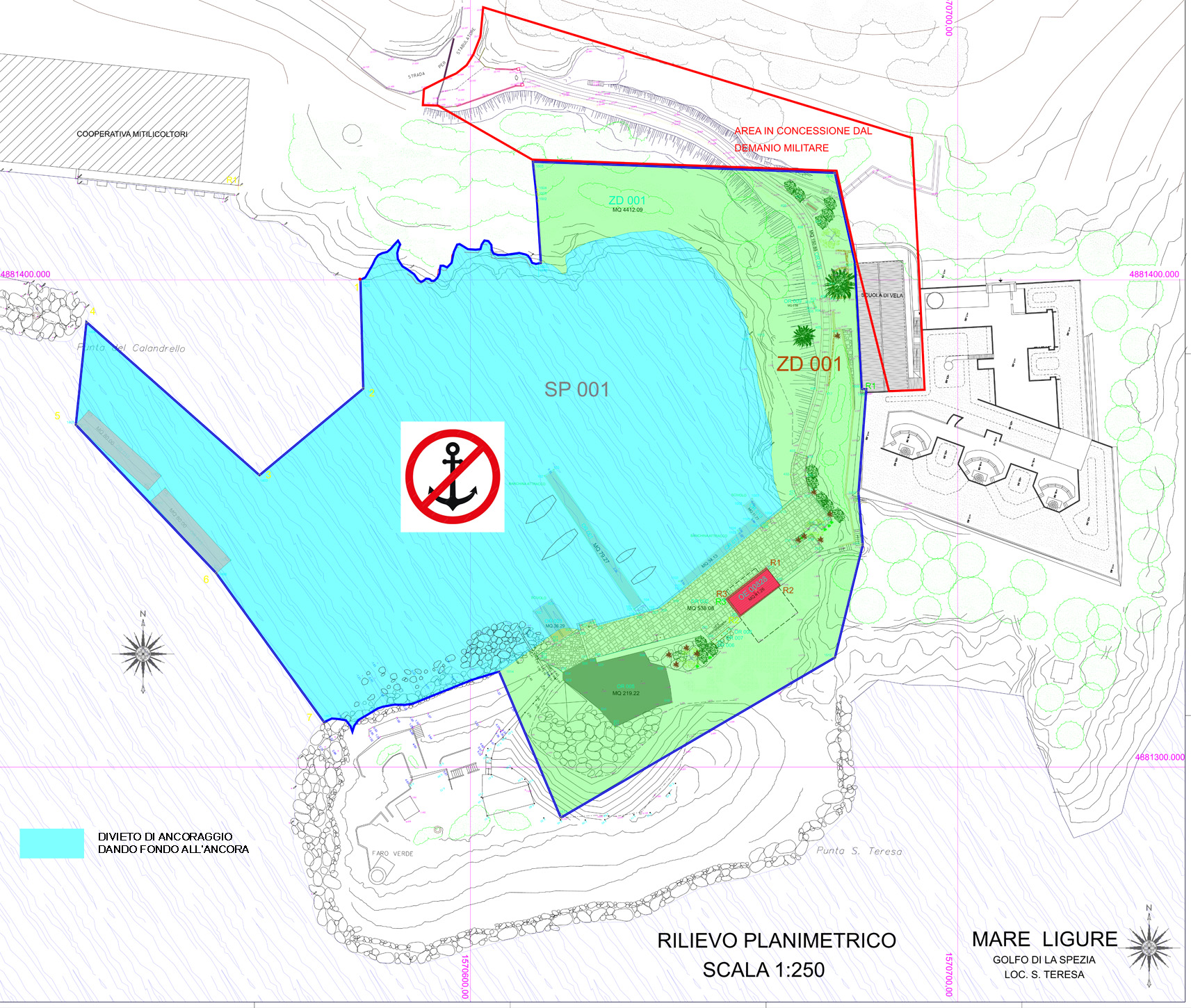
Figure 1. Map of Santa Teresa Bay with the area at sea (blue) where anchoring is prohibited.
Artificial reefs for marine regeneration
The regeneration of the bay was already under way through the Oyster Project. It has now been strengthened by the design and development of 3D-printed artificial reefs made from innovative, circular materials. Created through a PhD project between ENEA and the University of Bologna, and supported by the Smart Bay Santa Teresa Underwater Observatory, which collects physico-chemical data, these structures aim to regenerate marine habitats and repopulate native species such as the European flat oyster (Ostrea edulis), thus supporting the development of effective NBS.
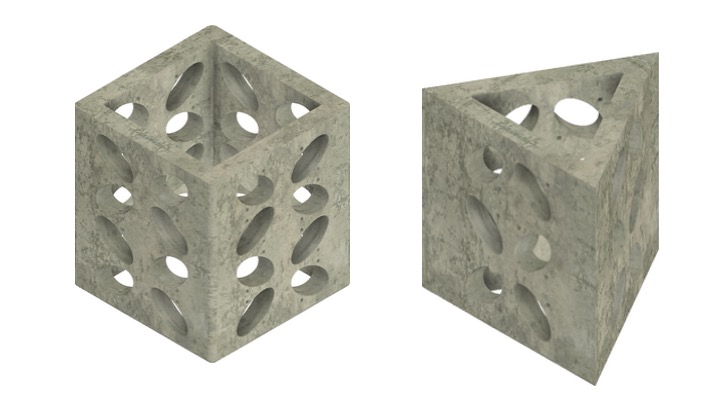
Figure 2. ENEA reefs for habitat regeneration. For further information: Caroscio et al. 2026
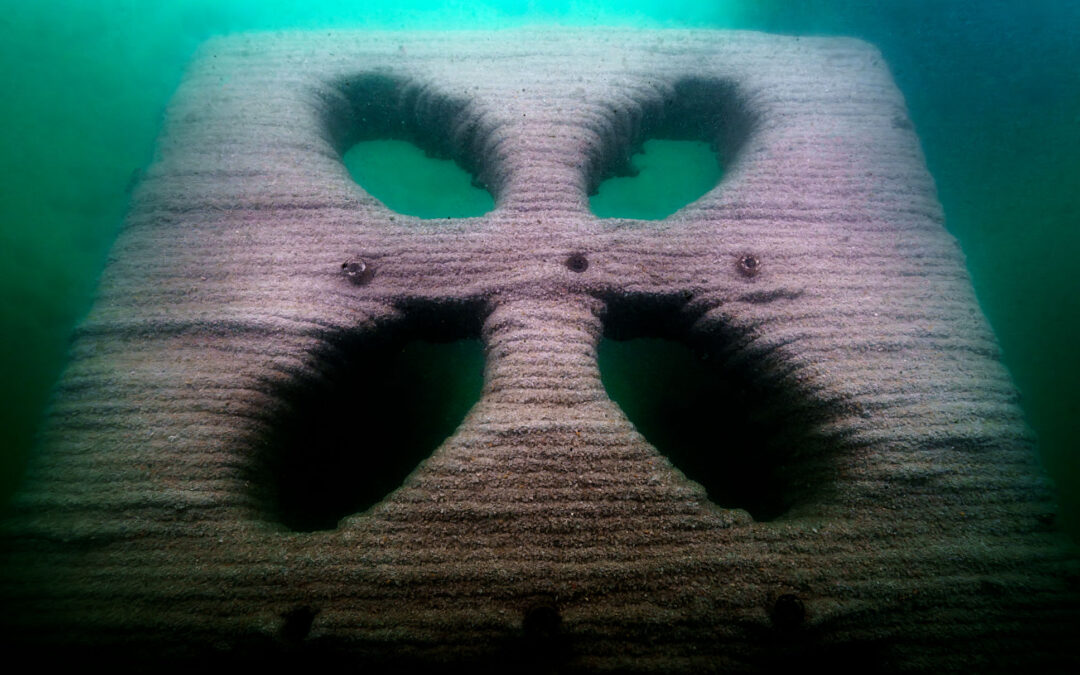
Two artificial reefs built to ENEA’s design (figure 2) and printed with marine-compatible cement were deployed at 10 m of depth in site A in August 2025. Three further reefs, also based on ENEA’s design (with a square base) and printed with cement and shells, were deployed at 6 m of depth in site B in March 2026 (figure 3).
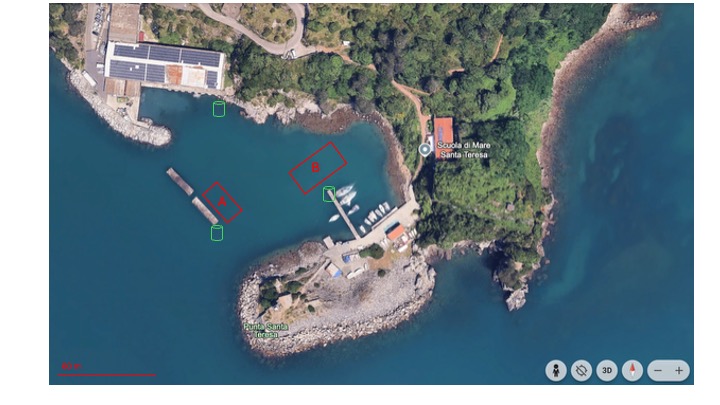
Figure 3. Santa Teresa Bay with the regeneration areas hosting reefs (red A and B) and high tech components of underwater observatory (green cylinders).
Monitoring the results
Colonisation studies on the Smart Bay Santa Teresa reefs have only just begun. Preliminary surveys were carried out on the reefs at site A in October and November 2025, and at both sites, A and B, in July and September 2026, when temperature loggers were installed. In the coming months, seasonal surveys will monitor biodiversity on the reefs, ecological succession, and oyster settlement and growth.
Looking ahead
This project is a concrete example of how coordinated, participatory, ecosystem-based actions can transform territories and help achieve Blue Economy objectives. Knowledge of how ecosystems function, of their potential and of the tools they can generate (such as NBS) guided a project that combined research, technology, innovation and social change to turn an overexploited area into a regenerative space for experimentation and citizen participation. RAISE has advanced both technology and research on keystone species of commercial value and regenerative potential. Although the Flat Oyster Restoration Project has only just started, the foundations laid by this work will underpin the future actions of Smart Bay Santa Teresa.
Project funded by RAISE Innovation Ecosystem, funded by the European Union – NextGenerationEU, through the Ministry of University and Research (MUR) under the PNRR (Mission 4, Component 2, Investment 1.5 – Project code: ECS00000035).
Cover image: E. Mancuso